
- Residential
- Commercial & Municipal
- Building Consulting
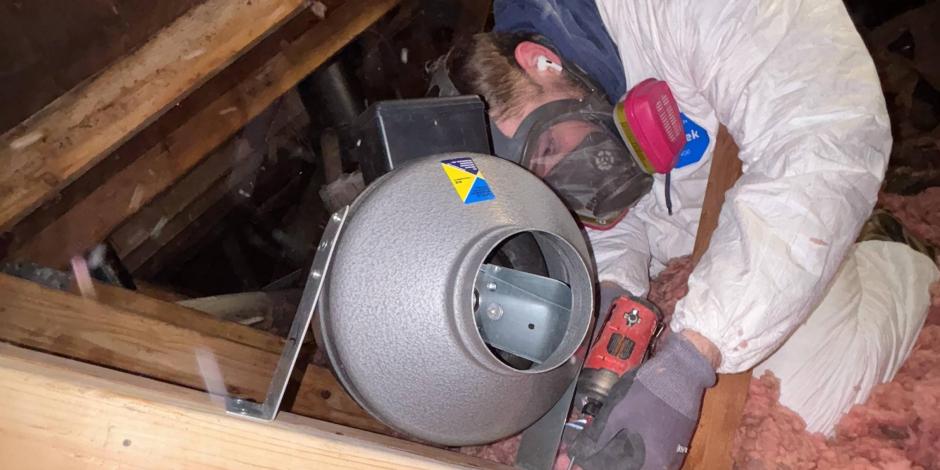
Ventilating a home is critical. Excess moisture in the home can lead to condensation on cold surfaces, rotting wood, peeling paint, and the growth of microorganisms, particularly in attics, basements, and crawlspaces. Building durability and occupant health are closely linked to moisture levels in the home. Adequate, consistent ventilation helps disperse and regulate the excess humidity produced by daily activities, such as showering, washing, cooking, and breathing all produce moisture and raise indoor humidity levels. Other sources of moisture can include an exposed dirt floor in the home, cracks in the foundation, holes in the roof, improperly caulked or flashed chimneys unsealed or uninsulated ductwork in an attic or crawlspace, and standing water, should be properly treated as part of the improvement of the home's ventilation.
Effective ventilation can be achieved through installing mechanical ventilation systems, such as bathroom exhaust fans, kitchen exhaust fans, and Energy Recovery Ventilators (ERVs). At Accurate-Airtight, during an energy audit a specific ventilation strategy is designed around you and your home. Taking into account the home's air leakage rate, occupants, size, and your needs, we at A-AE perform a minimum ventilation calculation with software to determine your home's needs and to recommend the right ventilation systems for your home. Common ventilation systems we recommend include:
Bathroom Exhaust Ventilation:
Bathrooms are high moisture load areas. Taking showers produces a lot of humidity that should be removed from the home. Stronger, energy star rated bath exhaust fans should be installed and vented to the exterior to do so. An 80 cfm or greater bathroom exhaust fan is recommended per bathroom with a shower. The fans should be vented to the exterior with rigid metal ductwork to maximize airflow.
Commonly, old homes have old low performing bath fans, or no fans at all. Even in many new homes, bath fans can be poorly vented to the exterior using flexible ductwork and results in very long and kinked ductwork that ends in causing poor performance of otherwise adequate exhaust fans. The ductwork for the fans is just as important as the fan itself.
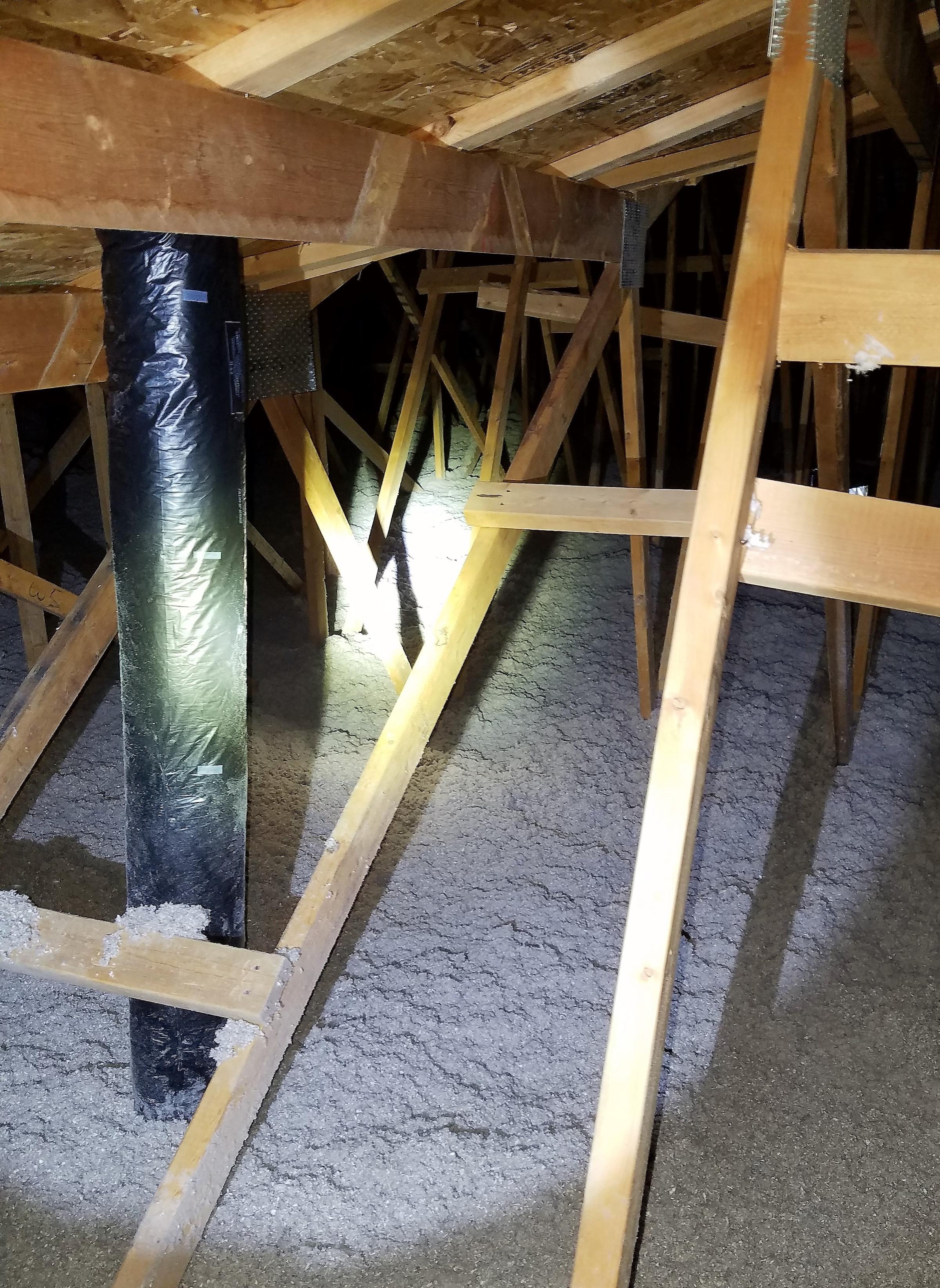
Any bath fan ductwork in unconditioned spaces (such as ducts located in attics and garages) need to be air sealed and insulated to stop any potential condensation. Commonly, ducts are not air sealed or insulated. This can be especially problematic in the winter months, when the fan is turned on to remove the warm moist air from the home; the warm moist air (as it travels through a very cold duct) condenses and drips back down into the home. To prevent this condensation; the duct should be air sealed using tapes, mastic, or other sealants at any duct seams, and where it penetrates to the exterior. The duct should also be insulated. Commonly duct wrap insulation or spray foam are used to insulate.
Accurate-Airtight Exteriors can install or replace new bathroom exhaust fans (both LED lighted or non-lighted options). Consider bath fans with built-in humidistats that can help remove excess moisture without the need for manual control. A-AE commonly installs Panasonic energy star rated bath fans with built in humidistats and speed rated (80 to 110 cfm), which we have found to be reliable and durable.
Kitchen Exhaust Ventilation:
Cooking and boiling water can produce a lot of humidity, exhaust gasses, and smoke. Especially if your kitchen has a gas stove, when the stovetop burners or gas oven are turned on to cook or pre-heat, the carbon monoxide levels which are emitted can be quite high. These air pollutants should be removed from the home with a kitchen exhaust fan or range hood that is vented to the exterior. A 100 cfm minimum or greater fan or range hood is recommended in a kitchen. Commonly, old homes have either no kitchen fan or a ‘recirculating’ kitchen microwave or range hood that are not vented to the exterior, so they do nothing to remove these pollutants and humidity.
Accurate-Airtight Exteriors can install or replace kitchen exhaust microwaves, range hoods, and ceiling or wall mounted exhaust fans. A-AE can vent these new (or existing) units to the exterior with rigid metal ductwork as well.
Energy Recover Ventilators (ERVs):
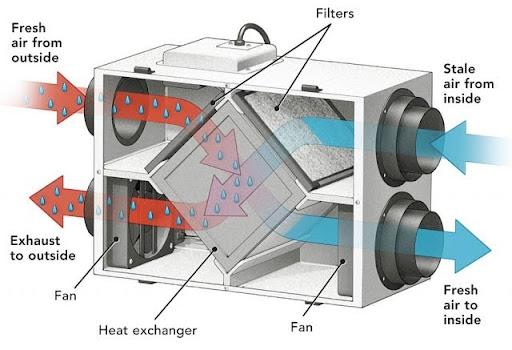
If your home is an above average tight home, the need for a whole home exhaust ventilation system, such as an Energy Recovery Ventilator (ERV) may be needed.
Various types of ERVs can be considered, including ‘spot’ (aka ‘local’) ERVs that serve open common areas, or whole-house ERVs that are tied to the HVAC ductwork directly. Some types of ERVs have their own designated ductwork and are not tied to the HVAC ductwork while others rely predominantly on the HVAC ducting for distribution and the furnace fan to move the new air.. Each ERV type is different and Accurate-Airtight Exteriors can build a specific ERV plan that fits you and your home’s needs.
Other Considerations:
ASHRAE Standards:
 A-AE recommends to follow ASHRAE (American Society of Heating, Refrigerating and Air-Conditioning Engineers) ventilation standards to ensure your home has adequate ventilation.
ASHRAE Standard 62.2 is the primary, nationally recognized standard for residential ventilation, and is aimed at providing acceptable indoor air quality (IAQ) to residential buildings. ASHRAE mandates a combination of whole-house mechanical ventilation to dilute contaminants and local exhaust ventilation (kitchen and bathroom fans) to remove moisture and pollutants at the source.
Key Components of ASHRAE 62.2 (Residential)
Whole-House Ventilation: Requires a mechanical system to bring in outside air, calculated based on floor area and the number of bedrooms.
Formula: Total CFM = (Area x 0.03) + (Number of Bedrooms + 1) x 7.5)Local Exhaust Ventilation (Demand-Controlled):
- Kitchens: Vented range hoods must provide at least 100 CFM, or 5 air changes per hour (ACH) if not vented.
- Bathrooms: Must have a fan providing at least 50 CFM, or 20 CFM if running continuously.
Naturally Venting Appliances:
Although upgrading bathroom and kitchen exhaust fans is recommended and should be performed, upgrading mechanical ventilation in kitchen and/or bathrooms can potentially cause an atmospheric water heater (or other atmospherically drafted appliance) to backdraft or ‘spill’ exhaust gasses, combustion byproducts, and carbon monoxide into the home, especially if the home is airtight or is being air sealed.
Accurate-Airtight Exteriors has a team of experienced energy auditors trained in combustion safety testing and performs combustion safety testing to ensure if safety issues occur, they are caught and you the homeowner are given recommendations to remedy or fix potential issues.